Electronic Door Locks & Locking Devices (1,749)

Suitable for single and double action doors (with positive centring door closers). The 1391 can be fitted vertically or horizontally (but not in the threshold) allowing flexibility in installation, and at all times provides a positive fail-safe operation (unless power supply continued during power failure by means of battery back-up).
Add to Compare

Your electronic security could save you money at every stage of its life-cycle — if you pick the right locks Installation, operation and expansion: electronic access control has costs attached to every stage of its lifetime. Of course, the benefits over mechanical locking outweigh these costs. And they could outweigh them even farther, if you choose the right locking technology: wireless. Installation is where it all begins. Installation stage is also the largest contributor to the potential cost saving in choosing wireless. In calculations for a recent cost savings report, ASSA ABLOY experts examined likely costs of a 100-door installation. Labour cost savings for those who chose wireless versus wired locks were a staggering 82.5%*. Yes, you read that right. Installing battery-powered locks versus wired locks would save you over 80% in the labour cost of specialist access control installers. Wireless installation is much faster; it is also less intrusive. Leading wireless locks require little or no drilling around the door, whereas wired access control needs cabling through and partly around the door. You can upgrade building security without inconveniencing your staff or disturbing everyday work routines. Energy savings can contribute to business sustainability goals According to the Harvard Business Review, energy efficiency has become one of the “key levers for business success”**. Battery powered wireless locks use less energy than traditional wired locks, which normally work via magnets connected permanently to electricity. Wireless locks work differently. They only “wake up” when presented with a credential for which they must make an access decision. This translates into another potentially large saving on your annual energy budget: more than 70%*, or thousands of euros over a typical access control installation’s lifetime. Other related energy and material costs are also lower for wireless locks. During operation, wireless locks require just a battery change — once every two years (approximately). Wireless locks also provide more flexibility — and can reduce costs — when you reconfigure or expand office space. High-quality wireless locks can typically be reinstalled at another door without impacting their reliability. You can move them to wherever is convenient. Typical cost savings on your next office relocation or expansion are around 30%* with wireless over wired locking. Choosing cost-saving wireless locks Aperio® wireless locks can save you money at every stage of their life-cycle. Battery-powered Aperio® RFID-equipped cylinders, escutcheons, handles and locks can be fitted as a new access control system or extend an existing installation by linking new doors to the same system wirelessly. There’s no need for staff to swap their key-cards, nor for anyone to carry more than one credential. They work seamlessly within almost every major access control system on the market, from over 100 different manufacturers. One control panel manages everything — Aperio®and legacy locks. Installion is quick, because there’s no cabling around the door, no invasive building work, and no need to change door hardware. Aperio® devices fit almost any opening or security level, exterior and interior doors — wood, glass or aluminium — from fire and escape doors to meeting rooms, labs and offices. To find out how much you could save by making the switch to wireless locks, you can download a free screen paper with project cost calculations at: https://campaigns.assaabloyopeningsolutions.eu/aperio-cost-savings *: ASSA ABLOY in-house calculations. See report: https://campaigns.assaabloyopeningsolutions.eu/hubfs/AA_Aperio_CostSavings_Solutionguide_07_2020_ENG_EMEA.pdf **: https://hbr.org/2017/01/energy-strategy-for-the-c-suite
Add to Compare
ASSA ABLOY’s Aperio® Technology enables the cost-effective integration of doors with mechanical locks into both new and existing access control systems. Thanks to its innovative wireless technology, integrating doors into an access control system will no longer require extensive wiring or structural alterations in the future. Doors will merely need to be equipped with electronic Aperio® locks with RFID readers and linked to the online access control system via a communications hub. The manufacturer independent architecture of Aperio® provides a convenient way of connecting with most access control systems via RS485, Wiegand, or IP interface. The Aperio® cylinders, escutcheons or locks communicate via an encrypted wireless link to a communication hub that is wired directly to the system. Highlights at a glance Additional doors can be integrated into access control systems at a low cost Update of access authorisations online and in real time Battery powered cylinders, escutcheons and locks with RFID reader functionality Easy to install with no structural alterations or wiring to the door No need to replace the existing RFID cards or transponders as these can also be used for wireless Aperio® doors. Standard RFID technologies are supported (iCLASS®, MIFARE™ Classic and DESFire™, HID PROX/EM410) Open standard, meaning Aperio® can be combined with all access control systems More than 100 global leading access control OEM’s already support Aperio®
Add to Compare
Corbin Russwin Access 600 RNE1 seamlessly integrates a full range of locks into your Wiegand Access Control System – from mortise locks to cylindrical locks and exit devices – all Grade 1 Corbin Russwin hardware. Customised monitoring options, wide range of quality hardware and easy system expansion define the advantages of the Access 600.
Add to Compare
Electrical actuation unlocks the strike jaw, releasing the latchbolt so the door can be opened without operating the latch itself. The compact mechanism fits into a jamb section as shallow as 44.55mm. The design of the steel wraparound faceplate helps provide additional protection to the timber door frame in the area of the electric strike. The subcover is flush with the outer face of the steel faceplate and is therefore ideal in situations where a ‘T-Bar' protection strip is fitted.
Add to Compare
Electrical actuation unlocks the strike jaw, releasing the latchbolt so the door can be opened without operating the latch itself. The compact mechanism fits into a jamb section as shallow as 44.55mm. The design of the steel wraparound faceplate helps provide additional protection to the timber door frame in the area of the electric strike. The subcover is flush with the outer face of the steel faceplate and is therefore ideal in situations where a ‘T-Bar' protection strip is fitted.
Add to Compare

Electrical actuation unlocks the strike jaw, releasing the latchbolt so the door can be opened without operating the latch itself. The compact mechanism fits into a jamb section as shallow as 44.55mm. The design of the steel wraparound faceplate helps provide additional protection to the timber door frame in the area of the electric strike. The subcover is flush with the outer face of the steel faceplate and is therefore ideal in situations where a ‘T-Bar' protection strip is fitted.
Add to Compare
Access decision is made by the Aperio™ escutcheon based on access data on card – access data are written on card via EAC system updater. It can be used with all European (DIN) mortise locks - in wooden, steel and tubular-frame doors.
Add to Compare


For remote access control of any narrow stile aluminium door and will accomodate a latch throw of up to 19.05mm. Electrical actuation unlocks the strike jaw, releasing the latchbolt so the door can be opened without operating the latch itself. The compact mechanism fits into a hollow jamb section as shallow as 47mm.
Add to Compare
For remote access control of any timber or steel door equipped with Adams Rite 4700 series (or similar) deadlatch. Electrical actuation unlocks the strike jaw, releasing the latchbolt so the door can be opened without operating the latch itself. The compact mechanism fits into a timber or steel jamb section as shallow as 44.45mm.
Add to Compare

For remote access control of any steel door equipped with Adams Rite 4700 Series (or similar) deadlatches. Electrical actuation unlocks the strike jaw, releasing the latchbolt so the door can be opened without operating the latch itself. The compact mechanism fits into a jamb section as shallow as 44.45mm.
Add to Compare
Electrical actuation unlocks the strike jaw, releasing the latchbolt so the door can be opened without operating the latch itself. The compact mechanism fits into a jamb section as shallow as 44.55mm. The design of the steel wraparound faceplate helps provide additional protection to the timber door frame in the area of the electric strike. The subcover is flush with the outer face of the steel faceplate and is therefore ideal in situations where a ‘T-Bar' protection strip is fitted.
Add to Compare
For remote access control of any narrow stile aluminium door and will accomodate a latch throw of up to 19.05mm. Electrical actuation unlocks the strike jaw, releasing the latchbolt so the door can be opened without operating the latch itself. The compact mechanism fits into a hollow jamb section as shallow as 47mm.
Add to Compare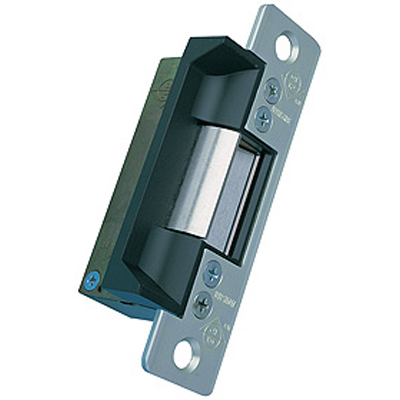
Featuring a narrower faceplate than the 7110 Series, the 7113 is particularly suited to 44mm thick timber doors. The strike can be mounted in the frame or the inactive leaf of a pair of doors and a modified subcover is available as an option for applications using a T-bar on the door.
Add to Compare
Featuring a narrower faceplate than the 7110 Series, the 7113 is particularly suited to 44mm thick timber doors. The strike can be mounted in the frame or the inactive leaf of a pair of doors and a modified subcover is available as an option for applications using a T-bar on the door.
Add to Compare
Featuring a narrower faceplate than the 7110 Series, the 7113 is particularly suited to 44mm thick timber doors. The strike can be mounted in the frame or the inactive leaf of a pair of doors and a modified subcover is available as an option for applications using a T-bar on the door.
Add to Compare
For remote access control of any steel door equipped with Adams Rite 4700 Series (or similar) deadlatches. Electrical actuation unlocks the strike jaw, releasing the latchbolt so the door can be opened without operating the latch itself. The compact mechanism fits into a jamb section as shallow as 44.45mm.
Add to Compare
For remote access control of any steel door equipped with Adams Rite 4700 Series (or similar) deadlatches. Electrical actuation unlocks the strike jaw, releasing the latchbolt so the door can be opened without operating the latch itself. The compact mechanism fits into a jamb section as shallow as 44.45mm.
Add to Compare
For remote access control of any timber or steel door and will accomodate a latch throw of up to 19.05mm. Electrical actuation unlocks the strike jaw, releasing the latchbolt so the door can be opened without operating the latch itself. The compact mechanism fits into a hollow jamb section as shallow as 47mm.
Add to Compare


For remote access control of any timber or steel door equipped with Adams Rite 4700 series (or similar) deadlatch. Electrical actuation unlocks the strike jaw, releasing the latchbolt so the door can be opened without operating the latch itself. The compact mechanism fits into a timber or steel jamb section as shallow as 44.45mm.
Add to Compare
For remote access control of any timber or steel door equipped with Adams Rite 4700 series (or similar) deadlatch. Electrical actuation unlocks the strike jaw, releasing the latchbolt so the door can be opened without operating the latch itself. The compact mechanism fits into a timber or steel jamb section as shallow as 44.45mm.
Add to Compare
For remote access control of any timber or steel door and will accomodate a latch throw of up to 19.05mm. Electrical actuation unlocks the strike jaw, releasing the latchbolt so the door can be opened without operating the latch itself. The compact mechanism fits into a hollow jamb section as shallow as 47mm.
Add to Compare